
Books By JF Benoist
My books explore how we relate to our thoughts, emotions, and sense of belonging.
My work as a counselor, teacher, and guide began with listening—deeply—to how people experience themselves from the inside.
What I heard, again and again, became the foundation of this work. These books emerged from that listening.
They are not about fixing yourself. They are about recognizing how we lose contact with our inner world—and how restoring connection brings clarity, resilience, and self-trust back online.

How These Books Are Used

Individually, as personal exploration

In therapy and coaching settings

In treatment centers and sober living communities

As shared language inside groups and workshops
They are not meant to be consumed quickly. They are meant to be felt, revisited, and lived.
For many people, they become a first doorway into a deeper relationship with themselves.

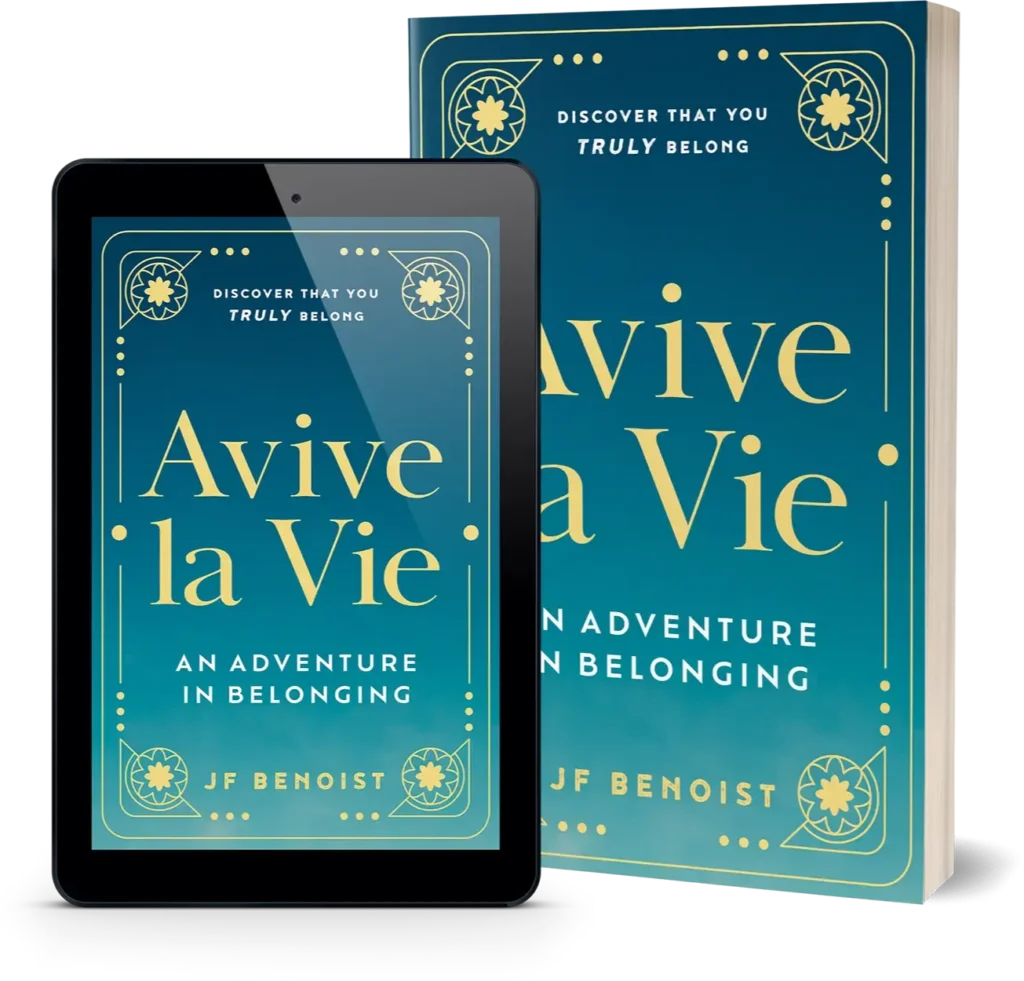
Avive la Vie:
An Adventure in Belonging
From Self-Improvement to Self-Connection
Belonging does not need to be earned. It is our birthright.While Addicted to the Monkey Mind examines the traps of conditioned thinking, Avive la Vie explores the possibilities that emerge when we reconnect with ourselves and each other.
✓Redefining Belonging: Shifting from an abstract ideal to a practical, lived experience.
✓The Cost of “Fitting In”: Moving past the belief that belonging must be earned through performance, adaptation, or constant self-correction.
✓Ending Self-Abandonment: Recognizing how leaving parts of ourselves behind creates a cycle of normalized loneliness.
✓The Path Forward: Reclaiming a sense of self to foster authentic connection and community.
An Invitation to Change: Moving beyond ingrained patterns of thinking and relating through a narrative centered on presence and authentic connection.
Uncovering Relational Roots: Exploring how early childhood experiences continue to shape our adult perceptions of worth, safety, and love.
Breaking “False Belonging Habits”: Identifying the survival strategies we formed in the past and learning how to release them when they no longer serve us.
Inside this book, readers explore:
- Why self-reliance alone cannot resolve loneliness or disconnection
- How emotional presence creates real resilience
- The difference between performing connection and experiencing it
- What it means to live from an embodied sense of worth
- How healing becomes possible in relationship, not isolation
Rather than strategies for self-improvement, Avive la Vie invites a shift toward self-connection — and from there, to authentic relationships with others. It blends story and psychology to make complex inner dynamics visible, human, and relatable.
This book became the philosophical and relational foundation for the work I now teach and live within communities, labs, and training sessions. It reflects a simple truth I’ve seen again and again
“Healing happens when we feel safe enough to be ourselves — and are met there without condition.”
— JF BENOIST, AUTHOR
These books are not the destination.
They are an invitation.
An invitation to slow down the narrative. To attune to your emotional body. And to rediscover what it feels like to belong—first to yourself, and then with others.
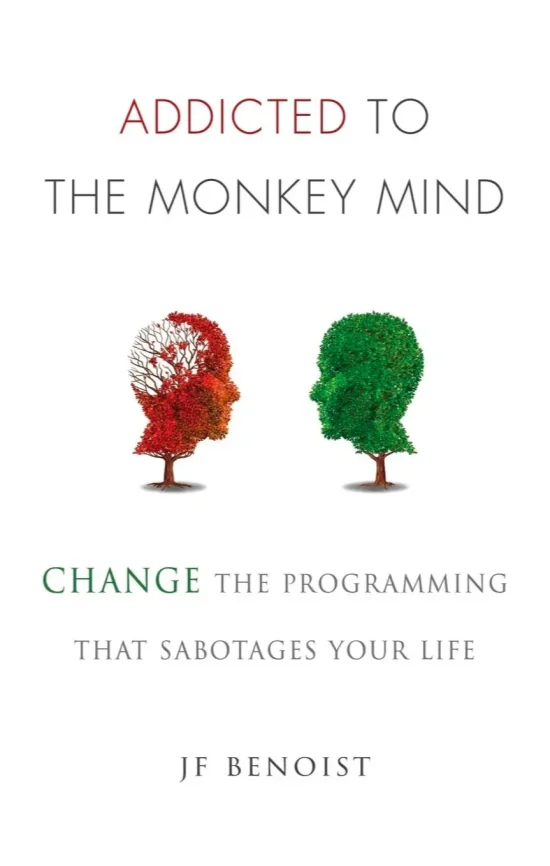
Addicted to the Monkey Mind
Breaking Free from the Inner Narrator That Keeps You Stuck.
Most people try to change their lives by thinking harder. This book explains why that approach so often fails.
This book grew out of what I witnessed again and again in my work with clients: people were not suffering because they lacked insight. They were suffering because their inner world was being run by conditioned thinking they didn’t know how to step out of.
Through story, metaphor, and lived examples, the book helps readers:
Rather than offering techniques to suppress thoughts, the book teaches how to observe them, question them gently, and create space between what you think and who you are. As that space grows, old beliefs lose their authority — not because they are fought, but because they no longer match lived experience.
Many therapists and treatment centers use this book because it speaks to what people feel, not just what they understand intellectually. It gives language to an inner process most people are already living — and offers a compassionate way out of the loop of self-judgment, anxiety, and self-sabotage.
At its core, Addicted to the Monkey Mind is not about changing who you are — it is about remembering how to be present with yourself, and discovering that clarity, resilience, and joy were never missing. They were simply buried beneath conditioned thought.
FOR PROFESSIONALS & ORGANIZATIONS
Bring this work to your clients
If you’re a therapist, counselor, coach, or program director, I often provide complimentary copies for your clients or community.Complimentary Book Copies
Use the books directly with your clients or within your program — at no cost. Reach out to explore what’s possible for your setting.
Join the Weekly Membership
Live support for therapists who want to:
- ✓ Model presence with clients
- ✓ Set kind boundaries
- ✓ Keep work from bleeding into life